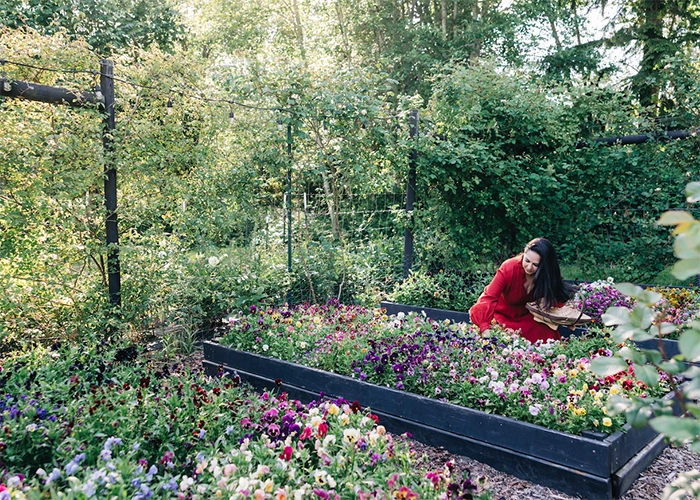
In Defense of the Pansy: A Local Flower Farmer Reimagines a Classic Bloom
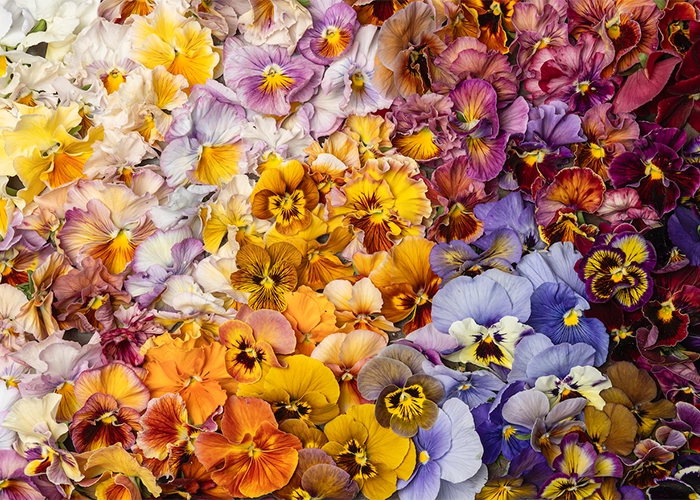
In celebration of our upcoming event, 'Pansies: Reimagined' with Brenna Estrada of Three Brothers Blooms, we thought we'd take a dive into the elegant, fragrant, and oft-underappreciated world of pansies. In Brenna's eyes, and throughout her beautiful new book, Pansies: How to Grow, Reimagine, and Create Beauty with Pansies & Violas, it's clear that this diminutive bedding flower we all know (and many love) can still sometimes be vastly underestimated for its diverse, singular color palette, or its effect in a landscape, container, and even in a bouquet.
Read on below for a few of our personal favorite pansies from the book that are regularly available at Sky, and for more details about the brand new Elegance Series pansies, coming to Sky for the first time from renowned Japanese plant breeder, Mr. Isao Sato.
As lovers of flowers and the pansy in particular, our hope, and Brenna's, is that you will find a renewed love and appreciation for this little bloom, and help keep unique and rare varieties accessible to the public, whether it's from Sky's plant and seed supply, Brenna's highly sought-after seed stock, or another local flower farmer with the same passion for these beautiful blooms.
Pansies & Violas: History & Basics
Pansies have been around long enough to fall in and out of fashion several times over. From their humble beginnings as a European wildflower, the first mention of violas can be traced to 4th century BCE Grecian medicinal plant records, as well as in poetry and myths. In the 1800’s, amidst a century-long pansy breeding craze that jumped from England to France to Belgium and beyond, they were declared the 'Most Popular Flower.' Today, dozens upon dozens of varieties are available at garden centers across the US, but especially in cooler, temperate climes where the pansy can truly thrive (*wink wink*).
In her book, Brenna offers a much more rich, in-depth history of these plants, sure to support the development of your own love for these storied flowers. She also goes a lot further into how they are classified, in an easy-to-understand format. For our purposes here today, it's useful to simply note that all garden pansies (the larger-faced flowers) are in fact in the violaceae family, and that violas are often the smaller-faced blooms.
The name Pansy comes from the French word ‘pensée’ for ‘thought,’ so we thought we'd give you a little something to think about. Please enjoy.
Why Pansies Are Great
1. Pansies & Violas are Hardy & Versatile
While they are typically grown as an annual, pansies are surprisingly hardy, often crossing into tender perennial territory. They grow anywhere in the US and flower the most in the spring and fall, when the weather is cooler. They are one of the best and most profusely blooming flowers for early spring garden color. Pansies require minimal care and will grow in a broad range of soil, light, and water conditions; only struggling in the heat of mid-summer and the worst cold of mid-winter.
While they make an excellent border and bedding plant in floral garden beds, and have for centuries, they can also be planted in containers where trailing varieties like the Cool Wave pansy can be grown for dramatic effect. They’re suitable for a variety of garden styles as well and can even be planted among vegetables to encourage pollinators like bumblebees to linger.
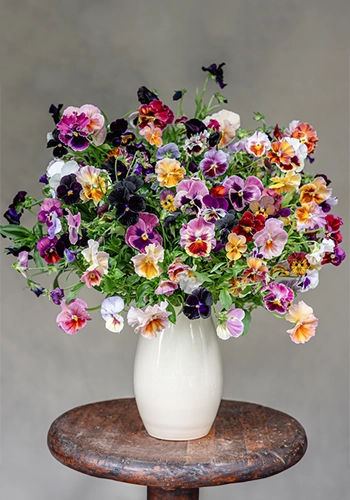
As Brenna discusses in her book, pansies used to have much longer stems. The 'legginess' we dislike and attempt to breed out of pansies as bedding plants today was actually sought after, and made these blooms quite exceptional cut flowers. There are tricks she has isolated over years of experience to achieve a long-stemmed, strong pansy for floral arrangements. (There are several gorgeous samples in her book, of which this is just one.)
2. Pansies & Violas offer a Huge Variety of Choices
You may be surprised to learn that pansies come in a staggering range of colors and styles. What is considered the traditional type is the three-color ‘face’, with a dark 'blotch' on the bottom petal. However, gardeners have been cultivating them since the 1700’s, which has resulted in the development of numerous varieties, patterns and even shapes. In 2025, breeders are still crossing and cultivating new types for different traits. Here are a few of our personal overall favorites:
Photo Credits: Brenna Estrada, Three Brothers Blooms
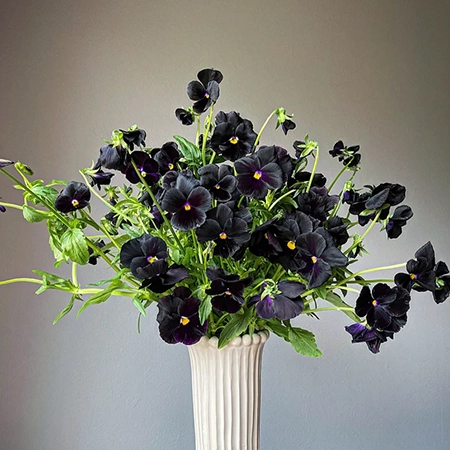
'Atlas Black' Viola
A great choice for goth, punk, dark and moody gardening types. These large blooms are a rich velvety black, lightly tinted with purple (the color of their parent plants), and contrasted by a bright yellow center. This also happens to be Brenna's absolute favorite variety.
'Tiger Eye' Viola
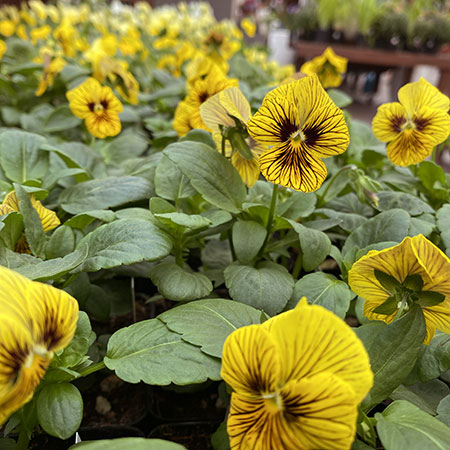
Though its blooms are on the smaller side, you can’t overlook the striking appearance of this variety. Dark brown-black lines spread from the center in a feather-like pattern, stark against a backdrop ranging from bright yellow to dark red-orange. Not only is 'Tiger Eye' lovely to look at, it has a delightful fragrance as well.
Matrix 'Coastal Sunrise' Mix Pansy
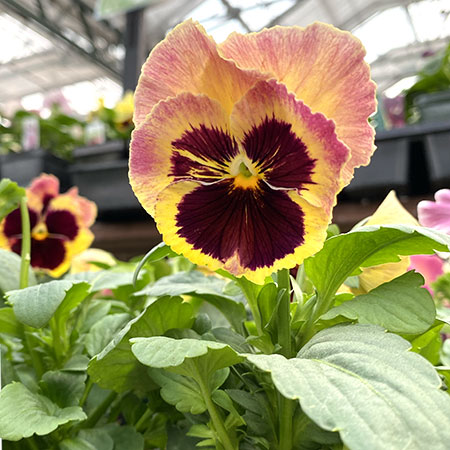
While many varieties of pansies feature a mix of colors on one plant, 'Coastal Sunrise' is outstanding for its vibrancy and variety, featuring large blooms in all the colors of sunrise: from deep fuchsia and twilight blue to pale yellow and orange. This variety definitely adds a colorful accent to any garden.
Frizzle Sizzle 'Orange' & 'Lemonberry'
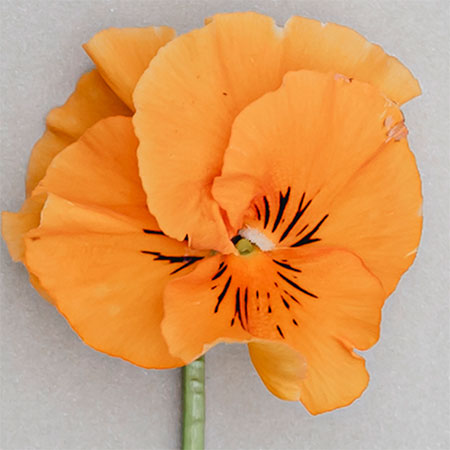
Petals featuring a uniquely ruffled edge is what makes the Frizzle Sizzle series so special. The ‘Orange’ variety is appropriately named, a cheerful eye-catching orange, fairly evenly colored with occasional lighter edges and darker tinted centers. Black ‘eyelashes’ radiate from the center for a lovely contrast, giving a very fall/autumn vibe. “Lemonberry’ is a more traditional tricolor of white and yellow, with a darker center ‘face,’ and outlined in a red-toned purple, as though the edges had been carefully dipped in a blueberry puree.
Elegance 'Antoinette'
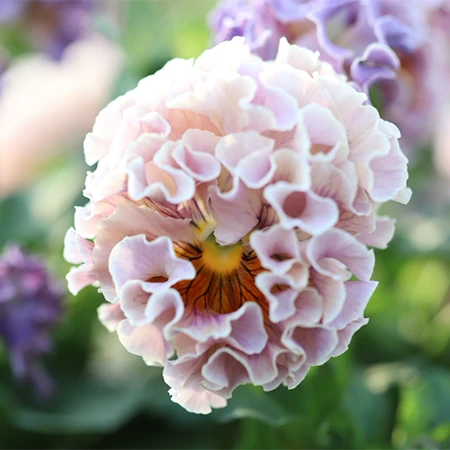
This series, newly available in America, was developed by Japanese breeder Isao Sato. The flowers are double and extravagantly ruffled, and come in a range of appealing pastels: lilac, salmon, peach, pink, yellow, and white. Many will be bi- or tricolors with darker centers and delicate picotee edges.
Each plant can feature a different, but lovely, range of colors, so be sure to buy these plants in bloom!

Elegance 'Twilight'
The 'Twilight' series is Antoinette's darker and bolder sister! Equally ruffled, even more lavishly double, Twilight's flowers come in sumptuous shades of wine red, flame red, imperial purple, and eggplant, dramatically edged and shaded with pink, lilac, yellow and/or white. Each velvety bloom will be its own extravaganza of color!
3. Pansies & Violas are Edible & Endlessly Craft-able
Pansy flowers are edible! Just snip them from the stem right below the flower head and enjoy! The flavor is mild and described as ‘grassy’ and ‘slightly wintergreen’ which means it can go with most anything. Add fresh to salads for color and brightness, use as a garnish for thick soups and plated main courses, or place them fresh or ‘candied’ on elegant baked goods and cakes. You could even freeze them into ice cubes or dry and add them to tea or other drinks for a touch of whimsy. Just be sure before eating that the flowers are clean and haven’t been treated with any chemical pesticides.
There are also a variety of crafts that can be done with pansies. In addition to the regular flower uses in bouquets and corsages, when pressed flat and dried they work well in a variety of paper crafting hobbies like card crafting and scrapbooking. Fresh flowers can be coated in resin and made into jewelry. Petals can be dried and added to bath bombs, potpourri, candles, or soap. You can even make your own custom prints by pounding them into paper or fabric to transfer the color and/or shape of the flowers. Let your creativity guide you!
Where & When to Get Pansies
Generally, it's safe to say that pansy & viola shipments at Sky 'follow the school year.' We receive regular deliveries from early fall (sometime in early September) through to late spring (sometime in May-June) until we absolutely have no room for them in the Spring greenhouse. Pro Tip: fresh deliveries arrive weekly, with the best selection generally available Thursday or Friday afternoons.
And, while our RSVP for Brenna's talk, Pansies: Reimagined on September 20th has now been filled, there may be walk-in space available to you at 11am, or you can sign up for an email above to learn when the next limited selection of Elegance Series Sato Pansies will be available at Sky.
For in-depth, PNW focused care tips, including how to grow pansies as hardy perennials instead of annuals, how to achieve longer stems that are better for bouquets, and the best way to defend them from common northwest pests, be sure to check out Brenna's book, available at Sky Nursery and every major bookseller, including Third Place Books!
We hope you enjoyed this wander into the quaint, vivacious world of the pansy, and that this post may have inspired just a little more appreciation of these tough, no-nonsense plants.