
Strawberries in Seattle: Tips & Tricks for Your Very Own Homegrown Berry Patch
Spring has officially sprung, and alongside rows of lettuce and peas, you may stumble across one of our favorite garden treats: strawberries! A slightly lesser-known but no less popular Western Washington staple, these berries are incredibly easy to grow at home, and require a fraction of the space and upkeep of fruit trees and other berry bushes. And, they produce abundant crops of tasty berries for several years, which makes them the perfect summer treat for gardeners of any experience level to enjoy.
This Spring, we wanted to shine a well-deserved spotlight on these summertime snacks by going on a deep dive into their history in the region, and why we think they deserve a spot in your garden!
The Puget Sound Past: Strawberry Fields Forever!
Before pints of industrially farmed berries were on the shelves in grocery stores across the country, Western Washington was a hub for the most flavorful strawberries you could get your hands on. This was in very large part due to the efforts of dozens of Japanese-American families in places like Vashon, Bainbridge, and Bellevue. Despite laws prohibiting Asian immigrants from becoming citizens (and, thus, owning land), families such as the Mukais, the Nakaos, and the Hayashidas settled in these cities and cleared the land, building tight-knit communities and thriving farms.
On many of these farms, strawberries were the star of the show; they were a fruit crop that produced an abundant harvest using little space. In fact, in 1925, Bellevue held its first ever Strawberry Festival; a 3-day affair where most of its fresh strawberries were provided by Japanese-American families. On Bainbridge Island, Hinako Hayashida’s father and uncle established the largest strawberry farm on the island, which thrived until 1942.
At that time, the internment of Japanese immigrants across the country, including here in the Seattle area had a profound effect not just on Northwest berry production, but on the families that made the industry a success in the first place. If you'd like to go deeper, we highly recommend Strawberry Days by David Neiwert, or perhaps a visit the Bainbridge Island Japanese Exclusion Memorial, which is currently in its final stage of construction.
Growing Strawberries at Home
Even though the Puget Sound area doesn’t have nearly as many strawberry farms as it did in days past, we’re still one of the best places to grow the sweetest, most flavorful berries in the country! And it’s not just our opinion; our weather and northern location meet many key requirements for strawberries to thrive:
- At USDA Zone 9a, we have the perfect temperate climate. Our summers aren’t too hot, our winters aren’t too cold, and so strawberries aren’t put under much stress as they ripen.
- Seattle receives plenty of rainy days, so the shallow roots of strawberry plants never go without water for long.
- Our northern latitude provides us with longer days in the spring and summer; almost 16 hours of daylight on the summer solstice! And since strawberries only require about 8 hours of sunlight per day to ripen, it’s relatively easy to find a good spot to plant them.
- While not quite as crucial as other factors, strawberries also like to be planted in slightly acidic soil (a pH of about 6). Here in the PNW, we have a leg up, as our soil is already naturally acidic!
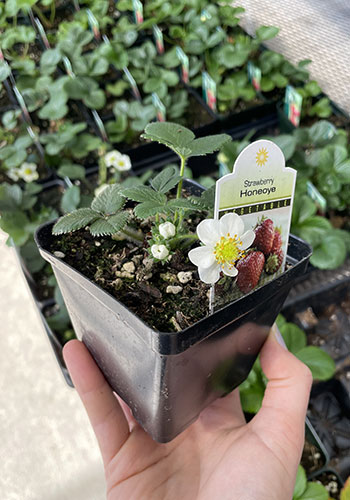
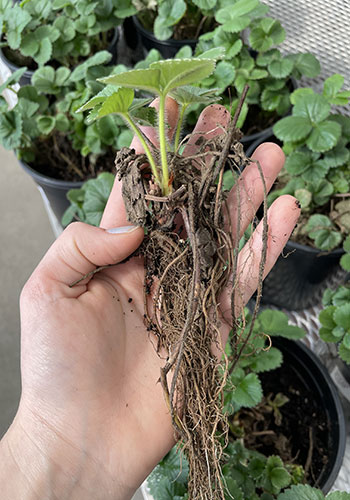
With all these factors in our favor, the next step is to, of course, invest in some strawberries to plant! And at Sky, we offer two ways of getting started:
Pre-Potted Plants are singular greenhouse-grown strawberry plants that are further along in the growth process when you purchase them. They already have their leaves, a flower or two, and some may even already be sending off runners! We carry over 2 dozen varieties in pots, and they’re a great option if you want to try several different strawberry varieties, or just grow two or three plants in a pot or hanging basket.
Bare-Root Crowns cut out the middleman; they’re the bare roots of a strawberry plant with few leaves, and no flowers or runners growing out of them – yet. Bare root strawberries have been grown out in a field before being harvested en masse and kept in their 'dormant' stage until delivery. What they lack in variety (we usually see only 5-10 varieties in a year), they more than make up for in savings. At Sky Nursery, our bare root crowns are sold in bundles of 25 crowns, the best option if you're looking to start your own strawberry patch! If you want to know when new varieties arrive, you can sign up here for a short, sweet email from us.
*Wait, why aren’t there Strawberry Seeds?
Strawberry seeds are much more difficult to come by compared to bareroot or plants. That’s because rather than only reproducing via seeds like other plants do, they also make runners! Runners are long stems with “nodes” spaced out along their length. When a node touches soil, it takes root and starts growing a whole new strawberry plant, which are exact copies of the “mother” plant! A single mother plant can easily produce between 30-50 runners per season under the right conditions, which makes starting strawberries this way far more efficient and consistent than growing from seed.
For more information about growing strawberries in the Puget Sound area, check out our Strawberry Planting Guide!
Favorite Strawberry Varieties at Sky:
Before we get into the specific varieties, here's a quick recap of the different types of strawberries, of which there are three:
June-Bearing: Per their name, June-bearing strawberries produce only 1 large crop per year sometime in—you guessed it—June. This makes them great not just for fresh eating, but for preserving, jams and jellies.
Everbearing: These strawberries produce 2 smaller crops per year; one in June, and a second in the late summer - fall (exact times may vary). The 2nd crop will usually be larger than the first, better for preserves, while the initial June crop is ideal for fresh-eating.
Day-Neutral: The perfect strawberry type for in-the-garden snacking all summer long! Day neutral strawberries produce a small, but continuous stream of strawberries from summer to fall.
At Sky, we handpick the best varieties we can get for PNW gardeners. Below are common varieties we see in both bare-root and starts, but as always, if you're looking for a specific variety, don't hesitate to give us a call, and we can confirm it's in stock for you.
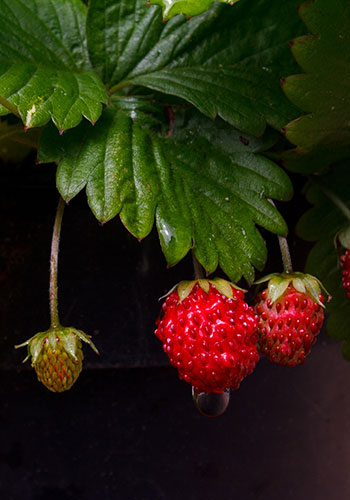
June Bearing Varieties
Honeyoye - Developed at the Cornell Research Station in Geneva, NY, Honeoye is one of the best June bearing varieties to grow in the Northern half of the U.S. These strawberries develop the best flavor and sweetness when ripened in temperatures that aren’t too hot (ideally below 80°), and are a consistently high producer of large, firm berries with a brilliant ruby hue.
Chandler - This workhorse June-bearer is reliable, vigorous, and a favorite among large scale farmers! Developed in Southern California, this variety has dominated strawberry production for decades due to its dependable production and berry quality. With its hefty yields of picture-perfect strawberries, Chandler offers the best strawberries for freezing or eating fresh in your yard!
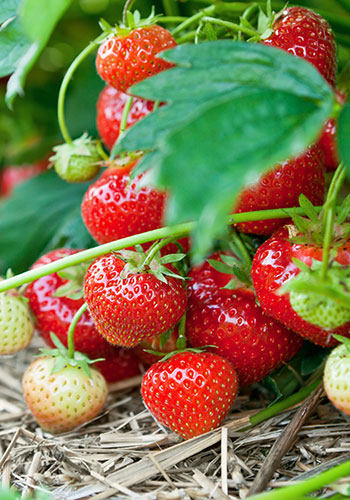
Everbearing Varieties
Ozark Beauty - A favorite everbearing variety amongst strawberry farmers, Ozark Beauty was developed in Arkansas with cooler climates in mind! A vigorous producer that will overflow with honey-sweet berries, perfect for freezing and preserving! They’re also hardier than other strawberry varieties--an excellent choice for a colder microclimate.
Fort Laramie - An everbearing variety known best for its larger than average fruits with a perfectly firm, juicy texture. Fort Laramie was developed by the USDA, and has an excellent balance of rich, sweet strawberry flavor with just a touch of tartness. This adaptable variety tolerates a range of conditions, and the berries can be frozen, preserved, or just eaten fresh!
Quinault - A heritage strawberry originally cultivated by the Quinault indigenous tribe in the Olympic peninsula. Later refined by WSU, the Quinault strawberry is now a beloved everbearing variety, with fat, heart shaped berries. These sweet, soft fruits are excellent for desserts and preserves, but not as great for freezing. Another unique quality of this variety is its vigorous runner production, much more than other everbearing varieties! Plant today and never run out!
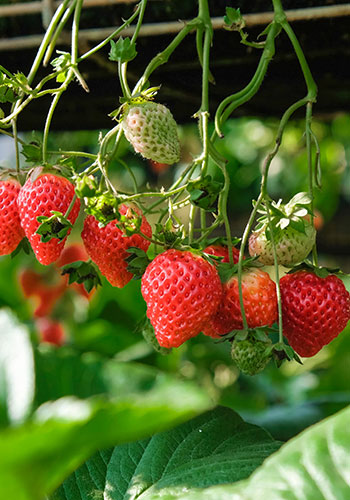
Day-Neutral Varieties
Seascape - One of the best and most prolific day-neutral varieties out there, Seascape truly has it all! This hybrid variety from California produces a consistent stream of large berries with excellent flavor. It's resistant to most diseases, and decently cold & heat tolerant. The perfect snacking strawberry that anyone can grow!
Albion - A fast-growing, hybrid day-neutral variety from California with a lovely conical shape and firm texture. Along with their delightfully sweet taste, Albion strawberries are extremely heat tolerant, surviving in temperatures that would scorch other varieties. Albion is also resistant to verticillium wilt, phytophthora crown rot, and anthracnose.
Whether you're a seasoned gardener or just looking for an easy way to have a little treat every time you garden, there's a strawberry for you!
Because supply can often often limited to a few deliveries, early spring is the ideal time to shop for strawberries at Sky. Don't miss out on planting your own berries and reaping the rewards of our PNW climate. After all, winding up with 'too many strawberries' in the summertime is an excellent problem to have.